
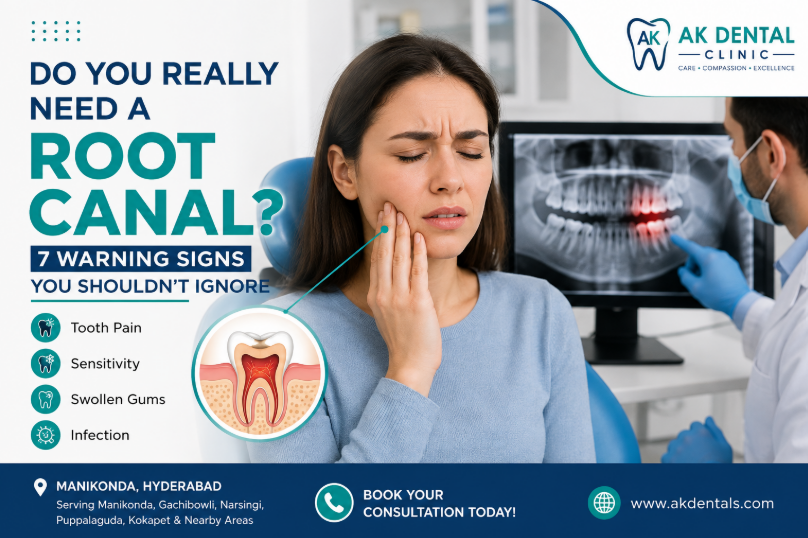
Most people hear the words “root canal” and immediately think of pain. In reality, a root canal treatment is designed to relieve pain, not cause it. Modern techniques and local anesthesia make the procedure comfortable for most patients while helping save a natural tooth that might otherwise need to be removed.
If you’re experiencing persistent tooth pain or sensitivity, you may be wondering whether a root canal is necessary. Here are the most common signs dentists look for.
What Is a Root Canal?
Inside every tooth is a soft tissue called the dental pulp, which contains nerves and blood vessels. When this pulp becomes infected due to deep decay, a cracked tooth, repeated dental procedures, or injury, bacteria can spread inside the tooth and cause severe pain or infection.
A root canal treatment removes the infected pulp, disinfects the canals, seals them, and restores the tooth so you can continue using it normally.
7 Signs You May Need a Root Canal
1. Persistent Tooth Pain
Pain that doesn’t go away is one of the biggest warning signs.
You may notice:
- Constant throbbing
- Pain while chewing
- Pain that radiates to your jaw or ear
- Pain that wakes you at night
Occasional sensitivity is normal, but continuous pain should never be ignored.
2. Sensitivity to Hot or Cold
Does your tooth hurt when drinking tea, coffee or ice water?
If the pain lingers for several seconds after the hot or cold stimulus is removed, the nerve inside the tooth may already be damaged.
3. Swollen or Tender Gums
Swelling around one tooth often indicates an infection.
You may notice:
- Puffy gums
- Tenderness
- A small pimple-like bump on the gum
- Bad taste in the mouth
These symptoms require prompt dental evaluation.
4. Tooth Discoloration
A tooth that suddenly becomes grey, dark yellow or brown may have lost its blood supply due to nerve damage.
While discoloration isn’t always caused by infection, it should always be checked by a dentist.
5. Pain While Biting
If you feel sharp pain every time you bite down, it may indicate:
- Infection inside the tooth
- Cracked tooth
- Inflamed nerve
Early treatment can often save the tooth before the infection worsens.
6. Deep Cavity
Not every cavity needs a root canal.
However, when decay reaches the pulp, a filling alone is no longer enough.
Ignoring deep cavities can eventually lead to:
- Severe pain
- Swelling
- Tooth abscess
- Tooth loss
7. Chipped or Cracked Tooth
A cracked tooth creates an entry point for bacteria.
Even if there is no pain immediately after an injury, infection can develop over time.
If you’ve broken a tooth during sports, an accident or by biting something hard, schedule a dental examination as soon as possible.
What Happens During a Root Canal?
At AK Dental Clinic, the treatment typically involves:
Step 1 – Examination
Digital X-rays help determine the extent of infection.
Step 2 – Local Anesthesia
The tooth is completely numbed to ensure a comfortable experience.
Step 3 – Cleaning the Infection
The infected pulp is removed, and the root canals are cleaned and disinfected.
Step 4 – Filling the Canals
The canals are sealed with a biocompatible material to prevent reinfection.
Step 5 – Crown Placement
In many cases, a dental crown is recommended to strengthen and protect the treated tooth for long-term function.
Is a Root Canal Painful?
This is the most common question we hear.
The answer is no.
With modern anesthesia, rotary instruments and advanced techniques, most patients say that getting a root canal feels similar to having a routine dental filling. The discomfort usually comes from the infection itself, not the treatment.
What Happens If You Delay Treatment?
Delaying treatment can allow the infection to spread beyond the tooth.
Possible complications include:
- Severe pain
- Dental abscess
- Swelling of the face
- Bone loss around the tooth
- Tooth extraction
Treating the problem early usually results in a simpler procedure and a better long-term outcome.
Why Choose AK Dental Clinic?
At AK Dental Clinic, we provide:
- Experienced MDS dentist with over 16 years of clinical experience
- Digital X-rays for accurate diagnosis
- Modern rotary root canal techniques
- Strict sterilization protocols
- Personalized treatment plans
- Convenient location for patients from Manikonda, Gachibowli, Narsingi, Kokapet, Puppalaguda, Financial District and nearby areas.
Frequently Asked Questions
Can a root canal save my natural tooth?
Yes. In many cases, root canal treatment allows you to keep your natural tooth instead of having it extracted.
How many visits are required?
Many root canal treatments can be completed in one or two appointments, depending on the complexity of the case.
Will I need a crown after a root canal?
Back teeth often benefit from a crown because it restores strength and helps protect the treated tooth from fracture.
Is it better to remove the tooth?
Whenever possible, preserving your natural tooth is usually the preferred option. Your dentist will recommend extraction only if the tooth cannot be restored.
Book Your Consultation
If you’re experiencing tooth pain, sensitivity, swelling or discomfort while chewing, don’t wait until the problem becomes more serious.
Visit AK Dental Clinic, Manikonda, Hyderabad, for a thorough examination and personalized treatment plan. Early diagnosis can often save your tooth and prevent more complex procedures later.