
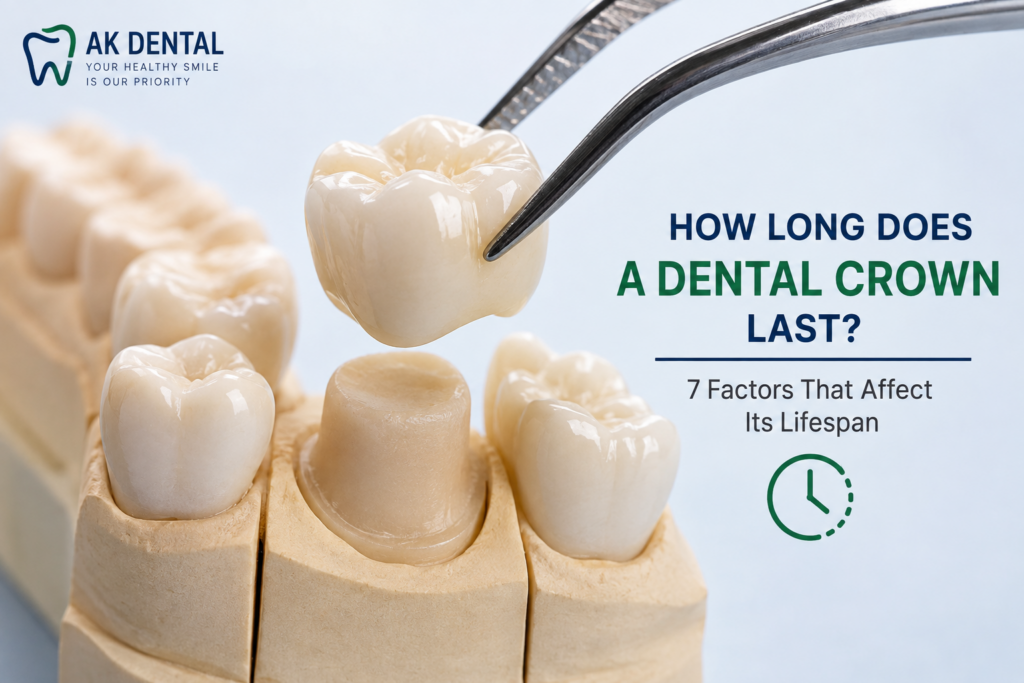
If you’re considering a dental crown, one of the first questions you may have is:
“How long does a dental crown last?”
A crown isn’t designed to last forever, but with proper care, a well-made dental crown can provide many years of service.
Dental crowns commonly last around 5 to 15 years, although some can last longer depending on the condition of the tooth, the crown material, your oral hygiene, your bite, and other factors.
So why do some crowns last much longer than others?
And how can you protect your crown once it has been placed?
Let’s take a closer look.
What Is a Dental Crown?
A dental crown is a custom-made restoration that covers the visible portion of a damaged or weakened tooth.
A dentist may recommend a crown to:
- Strengthen a weakened tooth
- Restore a broken tooth
- Protect a tooth with extensive damage
- Restore a heavily filled tooth
- Cover a tooth after root canal treatment
- Improve the appearance of certain damaged or discolored teeth
- Restore an implant-supported tooth
A crown is different from a filling because it covers and protects a much larger portion of the tooth.
The American Dental Association explains that crowns can strengthen teeth with large fillings when insufficient tooth structure remains to support another filling, as well as protect weak or broken teeth.
How Long Does a Dental Crown Last?
In general, dental crowns can last approximately 5 to 15 years with proper care.
However, this is not an exact expiry date.
A crown may last longer or need replacement sooner depending on several factors.
For example, a crown on a tooth that experiences heavy chewing forces may experience different stresses from a crown on a front tooth.
Your oral hygiene, bite, grinding habits, crown material, and the health of the underlying tooth can also make a difference.
So instead of asking only “How many years will my crown last?”, it’s more useful to ask:
“What can I do to make my crown last as long as possible?”
7 Factors That Affect How Long a Dental Crown Lasts
1. Your Oral Hygiene
A crown itself cannot develop a cavity because it is not natural tooth structure.
However, the tooth underneath and around the edges of the crown can still be affected by plaque and decay.
This makes daily oral hygiene extremely important.
You should:
- Brush twice a day
- Clean between your teeth daily
- Pay attention to the gumline
- Attend regular dental check-ups
- Have professional cleanings when recommended
A crown doesn’t mean you can stop caring for the tooth underneath it.
2. Your Bite and Chewing Forces
Every time you chew, your teeth experience pressure.
If your bite places excessive force on a crowned tooth, it may increase stress on the restoration.
Your dentist will check the crown’s fit and your bite after placement.
If the crown feels like it hits before your other teeth, or you feel discomfort when biting, let your dentist know.
A small adjustment may sometimes be needed.
3. Teeth Grinding and Clenching
Bruxism—teeth grinding or clenching—can put significant forces on your teeth and dental restorations.
Over time, grinding may contribute to:
- Crown wear
- Chipping
- Cracking
- Tooth sensitivity
- Jaw discomfort
- Damage to neighboring teeth
If you grind or clench your teeth, tell your dentist before or after getting a crown.
Your dentist may recommend a custom protective appliance when appropriate.
4. The Condition of the Tooth Underneath
A crown can protect a tooth, but it doesn’t eliminate every risk associated with the underlying tooth.
If the tooth underneath develops decay, cracks, or other problems, the crown may eventually need treatment or replacement.
This is why regular dental examinations remain important even after you’ve received a crown.
5. The Location of the Tooth
Not every tooth experiences the same amount of force.
Back teeth generally experience significant chewing pressure, while front teeth have different functional demands.
The location of the tooth can therefore influence the forces acting on a crown.
Your dentist will consider the tooth’s position and function when selecting and planning the restoration.
6. The Crown Material
Dental crowns can be made from different materials, and each has its own characteristics.
Common options include:
- Zirconia
- Ceramic
- Porcelain-fused-to-metal
- Metal
- Other restorative materials
At AK Dental Clinic, crown options include ceramic, porcelain-fused-to-metal and zirconia crowns, depending on the patient’s dental condition and treatment requirements.
The best material isn’t necessarily the same for every patient.
Your dentist can recommend an option based on factors such as the tooth’s location, strength requirements, appearance, bite, and overall treatment goals.
7. Your Daily Habits
Certain habits can put unnecessary stress on a crown.
Try to avoid using your teeth to:
- Open packages
- Bite plastic
- Crack nuts
- Chew ice
- Break hard objects
- Bite very hard non-food items
These habits can damage natural teeth as well as dental restorations.
How Do You Know When a Dental Crown Needs to Be Replaced?
Crowns don’t necessarily need to be replaced simply because they have reached a particular number of years.
Your dentist will evaluate the condition of the crown and the tooth underneath it.
Signs that a crown may need attention include:
- A loose crown
- A cracked or chipped crown
- Pain around the crowned tooth
- Persistent sensitivity
- Food repeatedly getting trapped around the crown
- A visible gap at the edge
- Bad taste or bad breath around the crown
- The crown feels different when you bite
- Damage to the tooth underneath
If you notice any of these changes, don’t wait for the crown to fall out.
A dental examination can determine whether the crown can be repaired, needs adjustment, or should be replaced.
Can a Dental Crown Fall Out?
Yes.
Although a properly fitted crown is designed to stay securely in place, crowns can sometimes become loose or dislodged.
Possible reasons include:
- Damage to the crown
- Decay underneath the crown
- Problems with the underlying tooth
- Excessive biting forces
- Teeth grinding
- Cement failure
- Trauma
If your crown comes off, don’t throw it away.
Keep it safely and contact your dentist.
Avoid chewing on that side until the tooth has been evaluated.
Can a Crown Get a Cavity?
The crown itself cannot develop tooth decay because it isn’t natural tooth structure.
However, the natural tooth underneath or around the crown can develop decay.
Plaque can accumulate near the crown’s margins, particularly when oral hygiene is poor.
This is why brushing, flossing, and regular dental check-ups remain important even after getting a crown.
Can You Get a Cavity Under a Crown?
Yes.
A crown covers the visible portion of the tooth, but the natural tooth remains underneath and around it.
If bacteria reach the underlying tooth, decay can develop.
This is one reason dentists check the condition of crowned teeth during routine examinations.
How Do You Take Care of a Dental Crown?
Taking care of a crown is similar to caring for your natural teeth.
Brush twice a day
Use a soft-bristled toothbrush and fluoride toothpaste.
Clean between your teeth
Floss or use another interdental cleaning method recommended by your dentist.
Pay attention to the crown’s gumline
Plaque can accumulate around the edges of the crown.
Avoid very hard foods and objects
Don’t chew ice or use your teeth as tools.
Manage teeth grinding
If you grind or clench your teeth, ask your dentist whether a night guard or other protective approach may be appropriate.
Attend regular dental check-ups
Your dentist can check both the crown and the underlying tooth.
Does a Dental Crown Need Special Cleaning?
A crown doesn’t usually require a completely different cleaning routine.
You should brush and clean between the teeth around it just as you do with your natural teeth.
However, some patients may need specific cleaning techniques depending on the location of the crown, gum condition, bridges, implants, or orthodontic appliances.
Your dentist can show you the best technique for your particular restoration.
How Long Does a Zirconia Crown Last?
Zirconia is a strong ceramic material commonly used for dental crowns.
Its durability can make it suitable for many clinical situations, including areas exposed to significant chewing forces.
However, it would be inaccurate to say that every zirconia crown will last a specific number of years.
The lifespan of any crown depends on factors such as:
- Fit
- Tooth condition
- Bite
- Grinding
- Oral hygiene
- Crown design
- Material
- Regular dental care
The right material should therefore be selected based on your individual dental needs rather than lifespan alone.
Do Front Tooth Crowns Last as Long as Back Tooth Crowns?
Both can last for many years, but they experience different types of forces.
Back teeth generally experience greater chewing forces.
Front teeth are more visible and therefore aesthetic considerations may have greater importance when selecting the restoration.
Your dentist will consider the location and function of the tooth when planning the crown.
Can a Crown Last 20 Years?
Yes, some crowns can remain functional for much longer than the commonly cited 5–15-year range.
However, this shouldn’t be treated as a guarantee.
The lifespan of a crown depends on the individual tooth, restoration, oral hygiene, bite, habits, and maintenance.
Regular dental examinations can help identify wear or problems before they become more serious.
What Happens If You Don’t Replace a Damaged Crown?
If a crown is cracked, loose, poorly fitting, or associated with decay underneath it, delaying treatment may allow the underlying problem to progress.
Possible complications can include:
- Further tooth decay
- Tooth fracture
- Pain
- Infection
- Damage to surrounding teeth
- Loss of the natural tooth in severe cases
If your dentist recommends replacing a crown, ask what problem they have identified and why replacement is necessary.
Does a Root Canal-Treated Tooth Always Need a Crown?
A root canal removes infected or damaged pulp from inside the tooth and allows the natural tooth to be retained.
Depending on the tooth and how much structure remains, a crown may be recommended afterward to restore and protect it.
AK Dental’s root canal treatment information specifically includes placement of a dental crown for strength and protection as part of restoring treated teeth.
However, not every tooth is identical, so the final restoration should be determined by your dentist based on the condition of the tooth.
What Happens During a Dental Crown Replacement?
If your existing crown needs to be replaced, your dentist will first evaluate the crown and the underlying tooth.
They may check:
- The crown’s fit
- The condition of the tooth
- The surrounding gums
- Your bite
- Signs of decay
- Cracks or fractures
- The need for root canal treatment
If the existing crown is removed, the tooth may require additional treatment before a new crown can be placed.
The exact process depends on why the crown needs replacement.
When Should You See a Dentist About Your Crown?
Contact your dentist if you notice:
- A loose crown
- A chipped crown
- A cracked crown
- Pain when biting
- New sensitivity
- Swelling around the tooth
- Bad taste or persistent bad breath
- The crown feels too high
- The crown has fallen out
- Food constantly gets trapped around it
Don’t wait for a minor crown problem to become a major tooth problem.
Dental Crown Treatment at AK Dental Clinic
At AK Dental Clinic in Manikonda, Hyderabad, dental crowns are used to restore and protect teeth that are damaged, weakened, or otherwise require full-coverage restoration.
The clinic offers crown options including ceramic, porcelain-fused-to-metal and zirconia, with treatment planned according to the condition and requirements of the individual tooth.
If a tooth has undergone root canal treatment, the clinic also provides restorative care including crowns to help restore strength and function.
Patients from Manikonda, Narsingi, Gachibowli, Puppalaguda, Kokapet, Financial District, and surrounding areas can visit AK Dental Clinic for a dental examination and crown consultation.
Frequently Asked Questions
How long does a dental crown last?
A dental crown commonly lasts around 5–15 years with proper care, although some crowns can last longer.
How can I make my dental crown last longer?
Maintain good oral hygiene, clean between your teeth, avoid chewing very hard objects, manage teeth grinding, and attend regular dental check-ups.
Can a dental crown last 20 years?
Some crowns can last 20 years or longer, but there is no guaranteed lifespan. The condition of the tooth, crown material, bite, oral hygiene, and daily habits all matter.
Can a crown get a cavity?
The crown itself cannot develop decay, but the natural tooth underneath or around the crown can develop a cavity.
Can a dental crown fall out?
Yes. A crown can become loose or dislodged because of damage, decay, excessive forces, cement failure, or problems with the underlying tooth.
How do I know if my crown needs replacing?
Pain, cracks, chips, looseness, changes in your bite, bad taste, persistent bad breath, or problems around the crown can indicate that it needs professional evaluation.
Does teeth grinding damage dental crowns?
Grinding and clenching can place excessive forces on crowns and may contribute to wear, chips, cracks, or other damage.
How long does a zirconia crown last?
Zirconia crowns are durable, but their lifespan varies depending on the individual tooth, bite, oral hygiene, crown design, and other factors. Your dentist can advise you about your specific restoration.
Do I still need dental check-ups after getting a crown?
Yes. Regular check-ups allow your dentist to monitor the crown, the underlying tooth, your gums, and your bite.
Can a crown be repaired instead of replaced?
Sometimes. Whether repair is possible depends on the type and extent of damage. Your dentist can examine the crown and determine the most appropriate option.
How long does it take to replace a dental crown?
The timeline varies depending on the condition of the tooth, the type of crown, laboratory work, and whether additional treatment such as a root canal is needed.
A Dental Crown Is an Investment in Your Tooth
A dental crown can protect and restore a weakened tooth, but getting a crown is not the end of dental care.
How long it lasts depends partly on how well you care for it.
Good oral hygiene, regular dental check-ups, avoiding damaging habits, and addressing problems early can all help extend the life of your crown.
If you already have a crown that is causing pain, feels loose, has chipped, or simply seems different from before, don’t ignore the change.
If you’re considering a dental crown in Manikonda, Hyderabad, book a consultation at AK Dental Clinic to have your tooth evaluated and discuss the most appropriate restoration.