
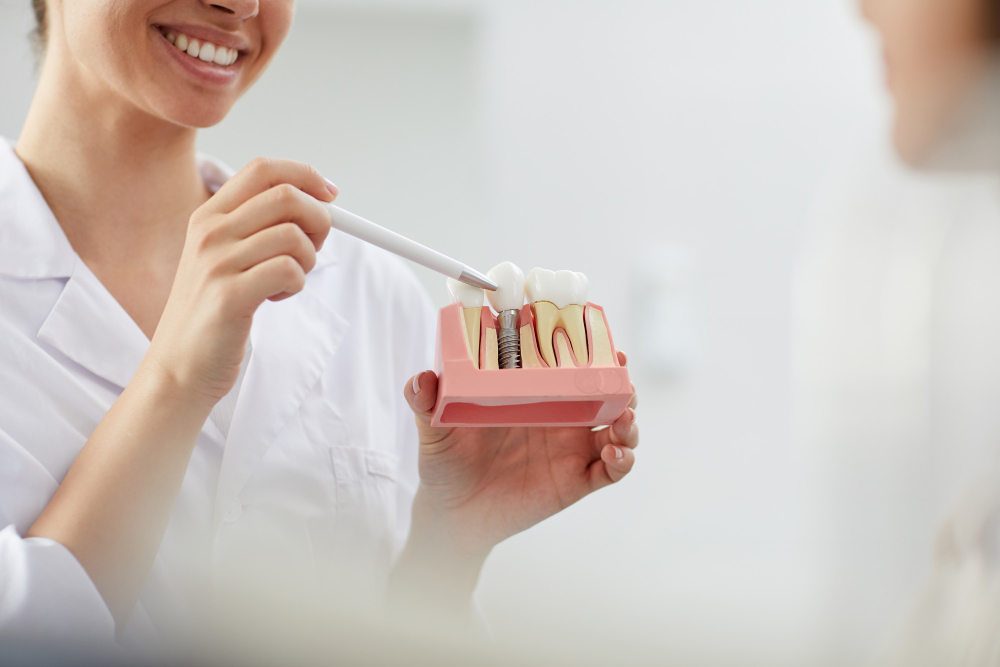
What Are Dental Implants?
Dental implants are small metal posts that replace missing teeth. Dentists place them into your jawbone. Over time, the bone grows around the implant. This creates a strong base for a new tooth. Many people choose dental implants because they look and feel like real teeth. In fact, dental implants can last for many years with proper care.
Symptoms and Signs You May Need Dental Implants
Sometimes, missing teeth can cause problems. For example, you may notice:
If you have any of these signs, you may want to ask your dentist about dental implants. Early action can help prevent more problems later.
Causes and Risk Factors for Tooth Loss
Many things can lead to tooth loss. For instance, common causes include:
Additionally, some risk factors make tooth loss more likely. These include smoking, poor oral hygiene, diabetes, and age. Knowing your risks can help you protect your teeth.
Diagnosis and Evaluation for Dental Implants
First, your dentist will check your mouth and teeth. They may take X-rays or 3D scans. These tests show if your jawbone is healthy enough for implants. Sometimes, you may need a bone graft to support the implant. Your dentist will also ask about your health history. This helps them decide if dental implants are safe for you.
Treatment Process: Steps Involved in Getting Dental Implants
Getting dental implants is a step-by-step process. Here is what you can expect:
Each step is important for a strong and lasting result. Recovery after each stage is usually quick, but your dentist will guide you.
Benefits and Potential Risks of Dental Implants
Dental implants offer many benefits. For example, they:
However, there are some risks. These include infection, nerve injury, or implant failure. Most people have no problems, especially if they follow their dentist’s advice. According to the CDC and dental journals, dental implants are safe for most adults.
Aftercare and Lifestyle Guidance for Implant Maintenance
Proper care helps your dental implants last. For best results, you should:
With good habits, your implants can stay strong for many years. If you notice pain or swelling, contact your dentist right away.
Prevention Tips for Oral Health
While dental implants are helpful, it is better to keep your natural teeth healthy. Here are some tips to prevent tooth loss:
By following these steps, you can lower your risk of needing dental implants in the future.
Conclusion
Dental implants can restore your smile and improve your quality of life. Still, it is important to know the steps, benefits, and risks. For the best results, always follow your dentist’s advice. Consult a dental specialist at AK Dental Clinic for personalized advice on dental implants.